Everyday exfoliation versus clinic treatments
How home cloths, acids and the old site’s dry-brushing tip differ from clinic peels and microdermabrasion — and how to avoid stacking them.
By the Anti Wrinkle Brisbane editors · Published 11 March 2025 · Updated 26 June 2026
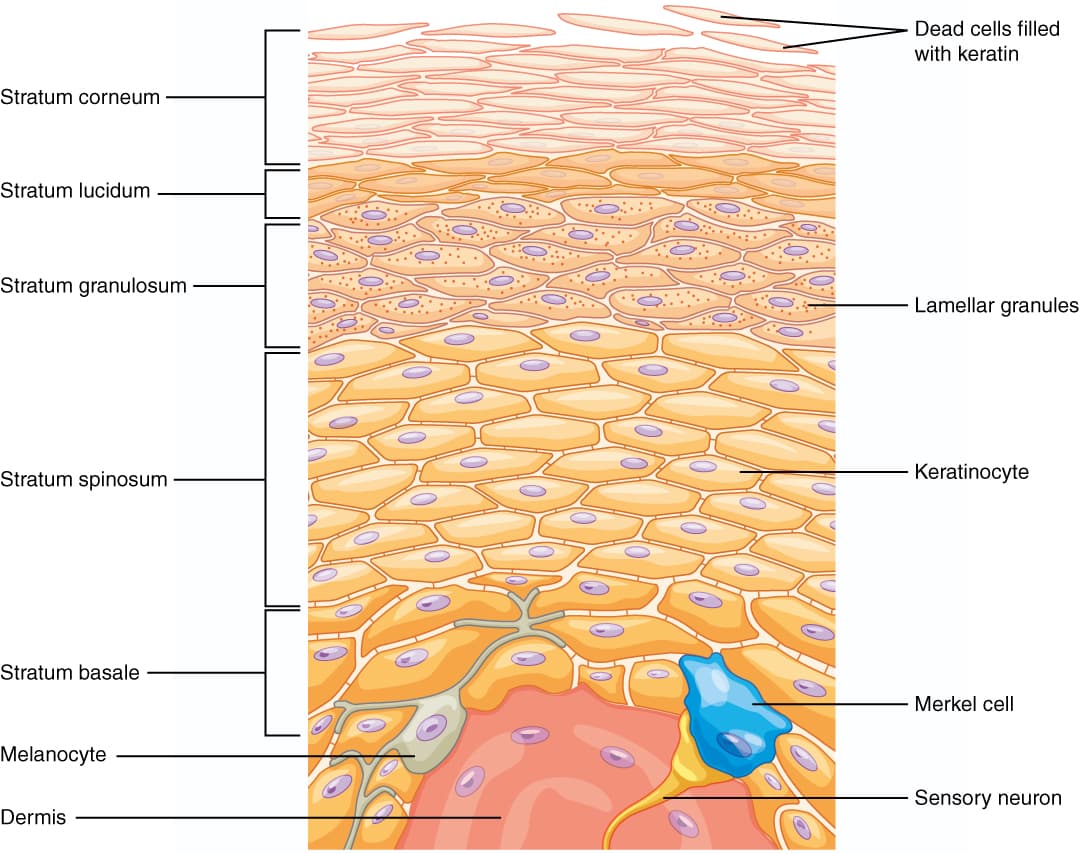
Layers of epidermis by OpenStax College. Licensed under CC BY 3.0. Source: Wikimedia Commons file page. Also listed on the image credits page.

The archived “5 Tips for Natural Skin Care” post opened with dry-brush exfoliation. Brisbane bathrooms still hold cloths, acids and devices bought at 11pm. Clinic menus still hold peels and microdermabrasion. The mistake is treating them as the same verb.
Home methods change the surface you already have
A soft cloth, a low-strength acid, or simply waiting for skin to shed will alter how makeup sits. They will not rebuild solar elastosis. Keep expectations at the height of collagen, elastin and the skin barrier.
Clinic methods are still medical-adjacent
Hygiene, concentration, and a person who should know when to stop are the differences. They also introduce downtime. Read microdermabrasion and chemical peels as separate tools.
Stacking is how barriers fail
A retinoid last night, a scrub this morning and a peel at lunch is a pile-up. Mention everything. Retinoids and OTC anti-ageing skincare is the vocabulary list.
Humidity hides roughness and then reveals it
In a steamy February, skin can look dewy while the barrier is thin. Air-conditioning then strips it. Dry skin and barrier repair in a subtropical climate is the recovery page.
The old dry-brush tip, updated
If you dry brush a body, keep strokes reasonable and skip broken skin. Do not import that brush to the eyelid. The 2012 post was a lifestyle column, not a procedure manual.
When “more exfoliation” is the wrong search
Persistent roughness can be eczema, seborrhoeic dermatitis or photodamage. A GP or dermatologist may be more useful than another acid. Who to see is the fork.
Plan clinic visits as clinic visits
Leave home exfoliants off the week you are assessed, unless your practitioner says otherwise. Aftercare: aftercare after a facial skin treatment.
Questions readers ask
Is dry brushing the face a good idea?
The 2012 Anti Wrinkle Brisbane post described body dry brushing. Faces have thinner skin and different anatomy. Many dermatology voices prefer gentler facial methods. If it stings or bleeds, stop.
Can I peel at home the night before a clinic peel?
That is a common way to overshoot. Tell the clinic what you used and when. Expect them to postpone if the barrier is angry.
Are scrubs with large grit safer because they are “natural”?
Particle size and sharpness matter more than the marketing adjective. Some nut-shell scrubs are harsh. Natural is not a safety category.
How do I know I have overdone it?
Stinging with plain water, shiny tightness, flaking that feels raw, and makeup that burns are common signs. Switch to barrier repair and get advice if it persists.
Image credit for this article is also collected on the credits page. Corrections go through the contact form.
Keep reading

Threading and hair removal near the face
Why the old Brisbane menu listed threading and waxing next to peels, and how to sequence hair removal around facial treatments without inflaming the barrier.
Lip and perioral ageing consultations
What a consultation about the mouth, lipstick lines and lip volume can cover in Australia — anatomy, cold sores, and why this page will not advertise a filler product.
Light-based facial treatments
Questions to take into a conversation about LED, IPL and laser on the face — eye safety, pigment risk, and why device brand names are not a diagnosis.