Dynamic and static lines
How clinicians describe lines that appear with movement versus lines visible at rest, and why that vocabulary is a starting point rather than a sales category.
By the Anti Wrinkle Brisbane editors · Published 4 March 2025 · Updated 21 August 2026
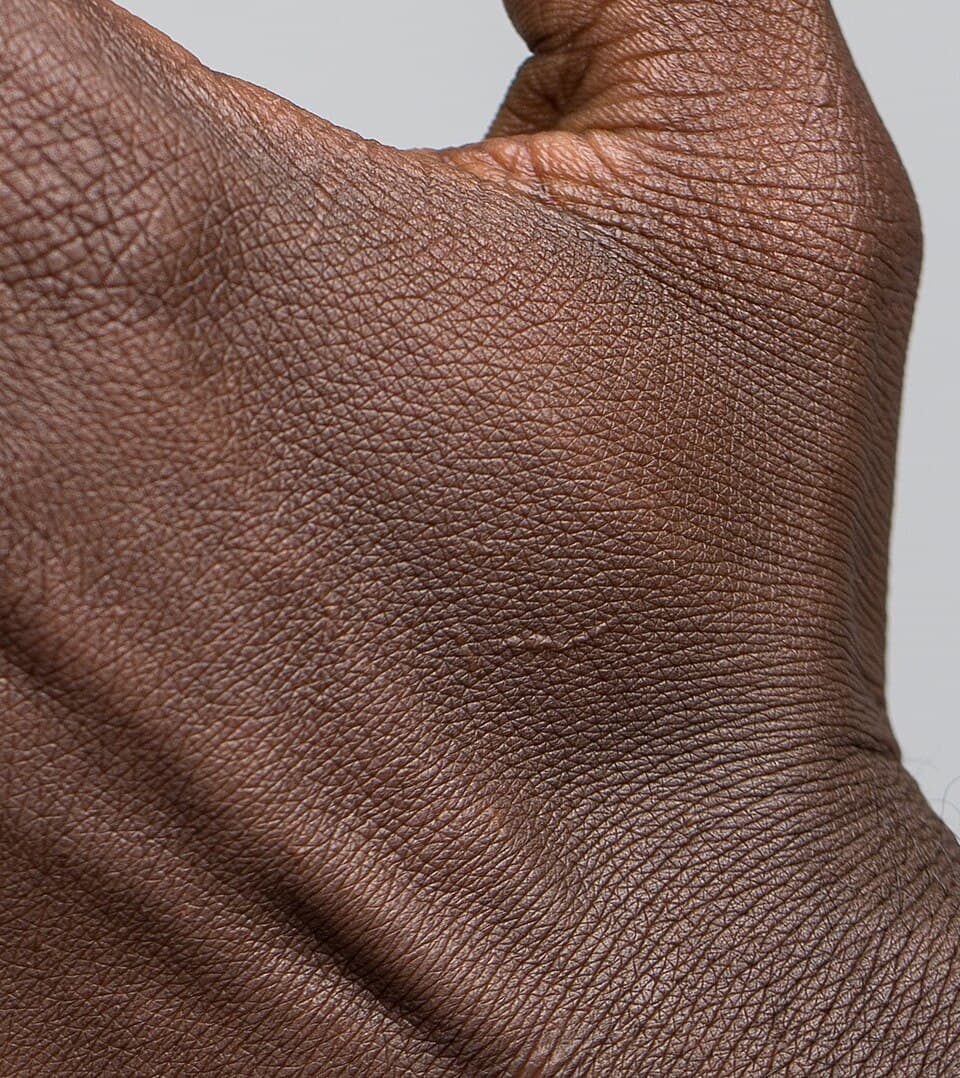
Hand skin close up by Genusfotografen (Tomas Gunnarsson) / Wikimedia; retouched by Spenĉjo. Licensed under CC BY-SA 4.0. Source: Wikimedia Commons file page. Also listed on the image credits page.

People arrive at this site after typing phrases such as “frown lines Brisbane” or “lines at rest”. The useful split underneath those searches is dynamic versus static. It is a description of when a groove shows, not a promise about what happens next.
What “dynamic” usually means
A dynamic line deepens when a muscle contracts: frowning, squinting, raising the brows, pursing the lips. At rest the skin may look comparatively smooth. The old clinic language around “expression lines” pointed at this group.
Watching movement in person beats a bathroom mirror under downlights. If you are preparing for an appointment, put this observation on your list in questions to ask before a facial procedure.
What “static” usually means
A static line is visible when the face is not making that expression. It can develop after years of folding, or from loss of support, or from sun-damaged dermis that no longer springs back.
Static does not automatically mean “needs a volume product” or “needs a device”. Those leaps are marketing. The biology is in how facial wrinkles form.
Why the split exists in a consultation
A registered practitioner uses the distinction to structure an examination. They may also talk about skin quality, medical history and medicines. Some options they consider are prescription-only. This publication will not name those products or imply that a dynamic line “should” meet a needle.
If you want the process, not the product list, read what happens in a cosmetic consultation.
Photographs lie in both directions
Flash flattens. Overhead LEDs carve shadows. A humid January afternoon in New Farm puffs the face; a dry July morning does the opposite. Before-and-after galleries are also advertising, which is why we do not run them.
If a clinic’s public page uses testimonials or guaranteed “resting face” claims, that is a regulation issue. See AHPRA testimonials and higher-risk procedures.
Everyday care still has a job
Sunscreen, retinoids on the shelf, and barrier repair change how skin handles light and water. They do not convert categories on command. Keep those habits in everyday skin care and keep procedure talk in consultations.
A note on language you may hear
Some rooms say “etched”, “set in” or “only when you smile”. Ask the speaker to show you what they mean on your face, and to separate description from recommendation. Informed consent for higher-risk procedures is the page for that pause.
Questions readers ask
If a line only shows when I frown, is it dynamic?
That is the usual working definition. Lighting and swelling still confuse home photographs. A practitioner will watch your face move in the room rather than rely on a single still image.
Do static lines mean I left it too late?
No. Static lines are common with age and sun. They are a description, not a deadline. Whether anything should be done is a separate, individual decision.
Can skincare turn a static line into a dynamic one?
Moisturiser and makeup can change how sharp a line looks. They do not rebuild dermal architecture on a timetable you can schedule. Be wary of any page that says otherwise.
Why does this site avoid saying which lines should be treated?
Because that decision sits inside a consultation and often involves medicines that must not be advertised. We explain terms. We do not prescribe.
Image credit for this article is also collected on the credits page. Corrections go through the contact form.
Keep reading

Considering a cosmetic facial treatment
A pause page for people who have started searching Brisbane clinics — motives, timing, health history and the difference between curiosity and a booking.

Glycation, sugar and skin
What glycation does to collagen, how the old Anti Wrinkle Brisbane lifestyle post fits modern evidence, and why this is not a detox story.

Brisbane sun, humidity and skin ageing
Why South-East Queensland’s ultraviolet index and humid summers change facial ageing, and which everyday protections are worth discussing before any clinic visit.