Safety and Australian regulation
TGA rules on cosmetic injection advertising
A reader’s guide to why Australian law restricts public advertising of many cosmetic injectable products, including everyday nicknames and price lists.
By the Anti Wrinkle Brisbane editors · Published 12 August 2025 · Updated 24 September 2026
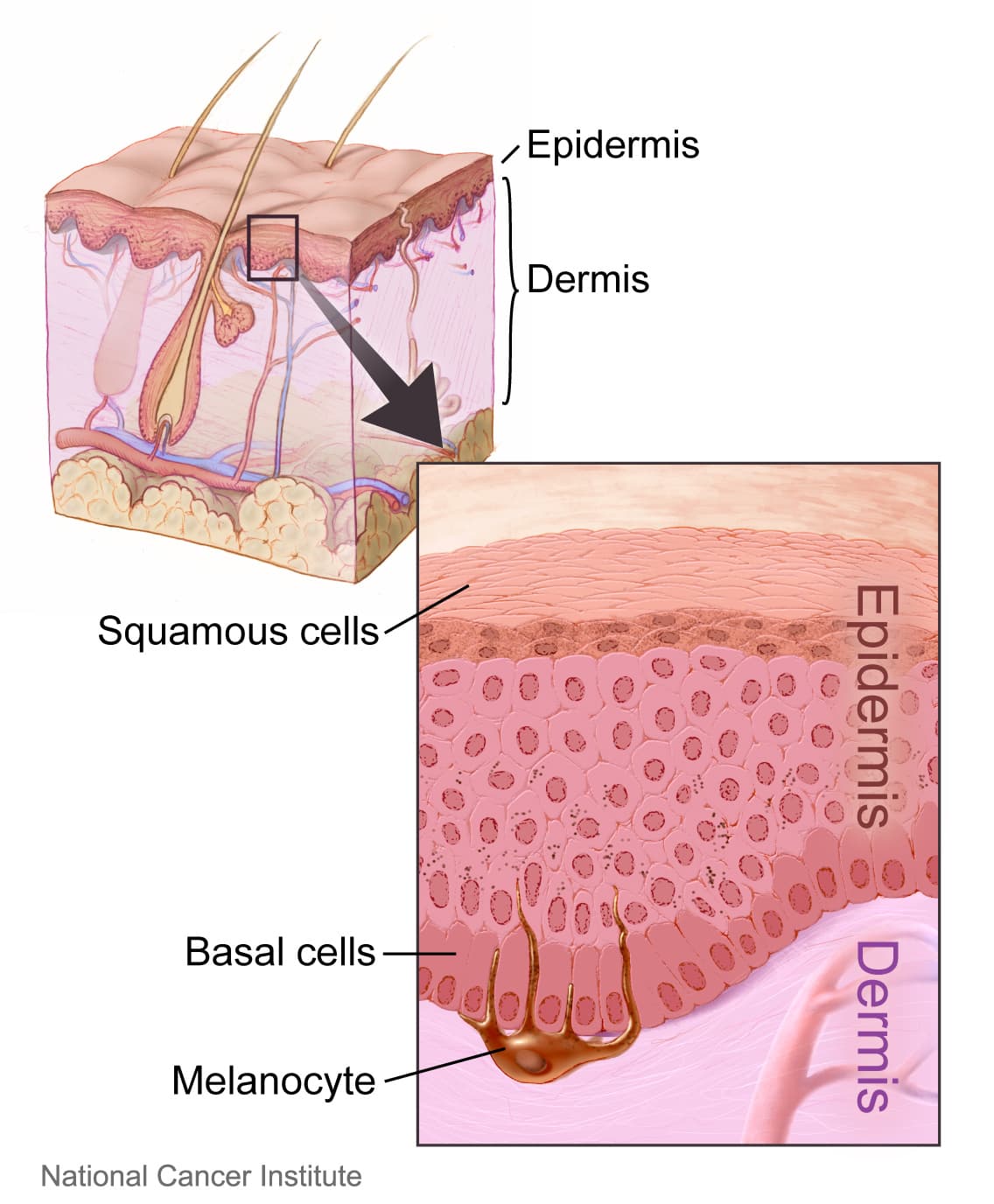
Layers of the skin by Don Bliss, National Cancer Institute. Licensed under Public domain. Source: Wikimedia Commons file page. Also listed on the image credits page.

The Therapeutic Goods Administration regulates advertising of therapeutic goods. Most cosmetic injectable products used for wrinkle or volume work contain Schedule 4 substances. Promoting those goods to the public is not a grey area that a clever hashtag can fix.
This is the spine of the regulation hub.
Advertising is about purpose, not fonts
A statement, picture or design that promotes the use or supply of a therapeutic good can be an advertisement. A pretty serif does not save it. Neither does “for information only” at the footer of a sales page.
Nicknames count
The TGA has been explicit that everyday substitutes, acronyms and hashtags can still point a reasonable consumer at a prescription-only injectable. That is why this publication talks about consultations and medicines as a class, and does not run a menu.
Price lists are not a loophole for clinics
Publishing a cost that only makes sense as the cost of a scheduled injectable is still promotional. The limited price-list scheme for pharmacies has conditions a cosmetic studio is unlikely to meet.
What clinics may still describe
A health-practitioner-led consultation. The fact that a prescription may or may not follow. Process, risk, and the need for assessment. That is also what what happens in a cosmetic consultation describes.
What this site does with the old domain
The historic brand used “anti wrinkle” in the hostname. We inherited a name, not a licence to advertise a medicine. Our about page records the split.
If you see an ad that looks wrong
You can raise it with the TGA. You can also read reporting concerns about a practitioner if a registered person is involved.
Pair with AHPRA
Advertising a health service also sits under National Law. Testimonials and outcome claims have their own page: AHPRA testimonials and higher-risk procedures.
Questions readers ask
Does this mean nobody can talk about wrinkles in public?
No. Educational discussion of ageing, consultations and everyday care is different from advertising the use or supply of a Schedule 4 medicine. This site is written on that distinction.
Are words like “anti-wrinkle injections” still allowed in ads?
The TGA has said that terms which a reasonable consumer would read as promoting a prescription-only injectable can amount to unlawful advertising. Clinics should take their own legal advice. We do not use those terms as a sales pitch.
Can a clinic publish a price per unit?
Price information that promotes a prescription-only injectable is likely to be advertising of that product. Pharmacy price-list exceptions are narrow and usually do not fit a cosmetic shopfront.
Where do I read the primary source?
Start with the TGA’s “Advertising health services and cosmetic injections” FAQ. We link it from our editorial standards page.
Image credit for this article is also collected on the credits page. Corrections go through the contact form.
Keep reading

Reporting concerns about a practitioner
Where Australians can take a concern about cosmetic care or advertising — the provider first, AHPRA, the TGA, and health complaints bodies — without turning this page into a case file.
Prescription-only medicines and public information
Why Schedule 4 cosmetic medicines sit behind a consultation, what a public website may explain, and how Anti Wrinkle Brisbane draws the line on this domain.

AHPRA testimonials and higher-risk procedures
What counts as a testimonial under Australian health advertising rules, why higher-risk cosmetic procedures are singled out, and how this site stays on the safe side of the line.